Notice the pattern
Spot the moment your mind starts building a scene that has not happened.
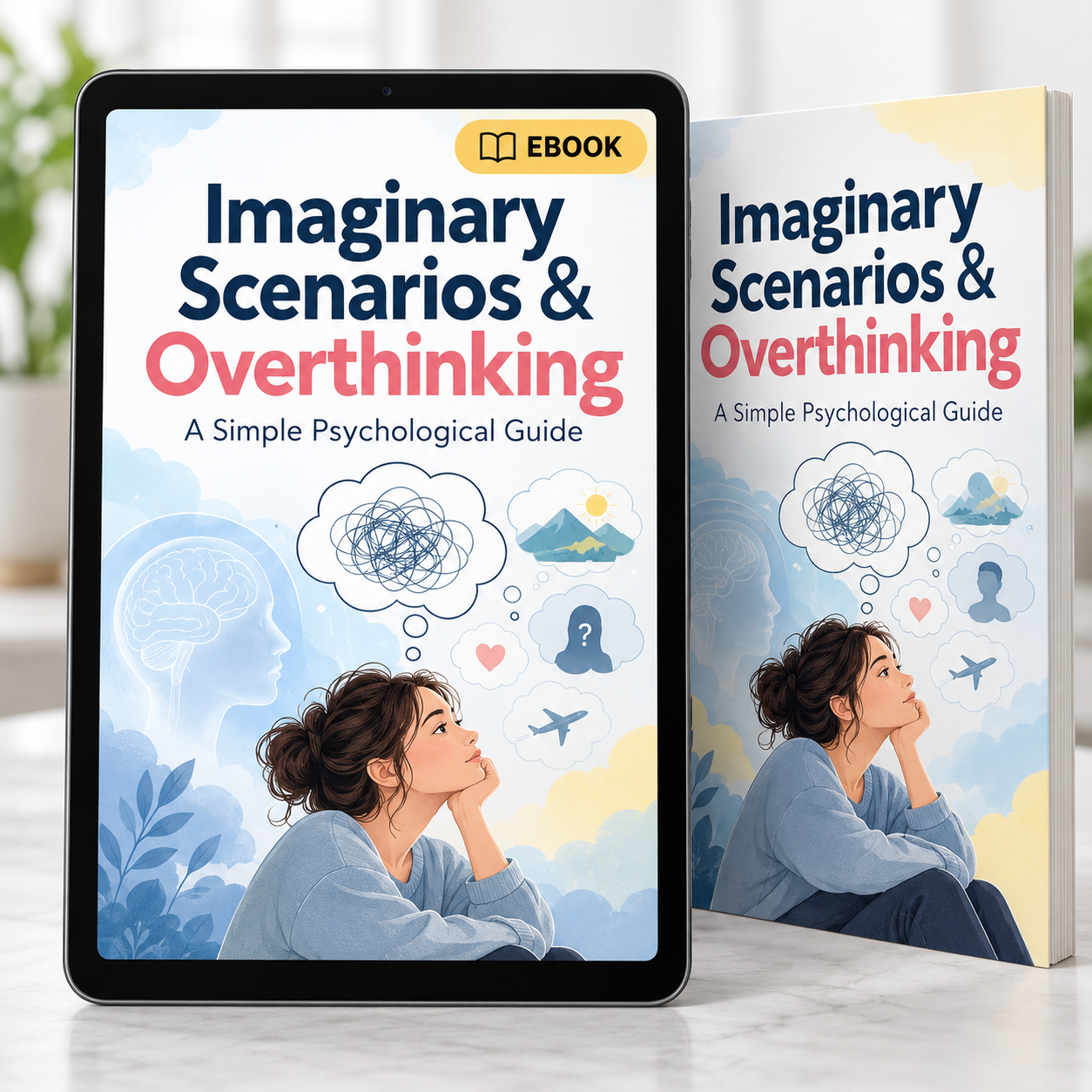
A simple psychological guide for understanding the patterns behind imagined scenarios and overthinking, with room to pause, reflect, and return to the present.
$11.31 USD One payment · Downloadable digital guide · No subscription
A reflective educational resource. It is not medical advice or a substitute for professional care.
This gentle guide is designed to help you notice when imagined conversations, outcomes, or worries begin taking over your attention.
Spot the moment your mind starts building a scene that has not happened.
Reflect on the feelings and unanswered questions that can pull you into overthinking.
Use simple grounding ideas to come back to what is known, real, and within reach today.
Create a calmer next step instead of letting an imagined outcome decide how you feel or act.
Use the guide at your own pace when a thought feels repetitive, a conversation is replaying in your mind, or the future begins to feel too loud.
Step back from the imagined scene and give yourself a moment before reacting to it.
Look at the thought with curiosity, without needing to judge yourself for having it.
Use gentle prompts to separate a fear, memory, or hope from what is happening now.
Choose one small, real action that helps you return to your day with more steadiness.
Buy your digital guide now and continue with Stripe’s secure checkout.
$11.31 USD · one-time payment
No. This guide is an educational reflection resource. It does not diagnose, treat, or replace mental-health support from a qualified professional.
This is a digital ebook with no shipping or physical product. Follow the delivery instructions shown after checkout.
The ebook is intended for personal use. Please do not resell, reproduce, or redistribute the file.
It is available now through the secure Stripe checkout linked on this page.
Important: This guide offers general educational reflection only. If thoughts or feelings are distressing, persistent, or affecting your daily life, consider speaking with a qualified mental-health professional or a local support service.